
Most Utah homeowners who start researching how to protect their home from wildfire quickly find that the topic splits into two distinct areas. The first is the land around the structure. The second is the structure itself. A qualified contractor addresses both in a specific order for specific reasons. Understanding the process before you hire gives you a clearer picture of what you're paying for.
Wildfire Season in Utah: When to Start Preparing
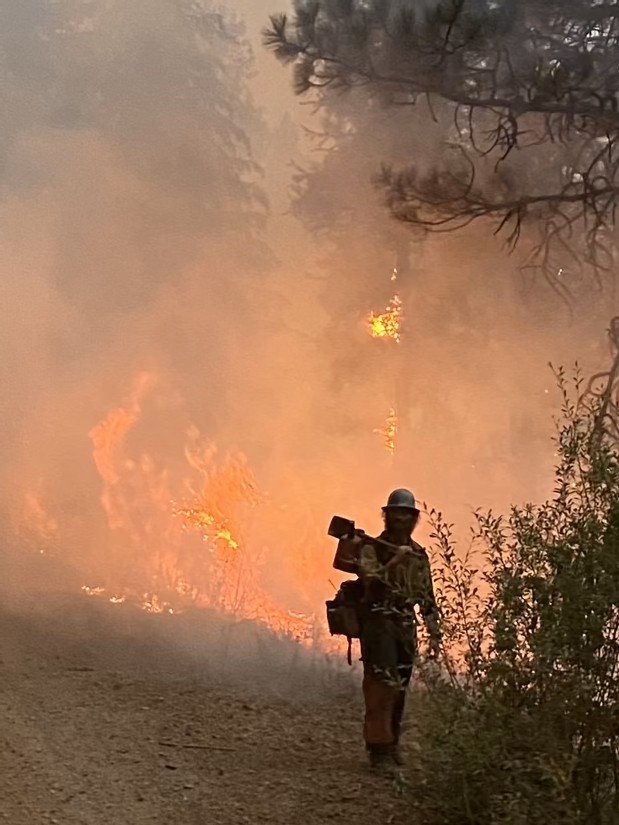
Wildfire season in Utah starts earlier than most people expect. By late spring, the grass in the foothills is already drying out. By July, active fire conditions are common across much of the Wasatch Front, the Uinta Basin, and southern Utah's canyon country. What to do before wildfire season is not a question you want to be answering in June. Preparation work should begin in late winter and early spring, when conditions still allow for significant vegetation management and structural work.
Use the Utah Wildfire Risk Explorer to check your property's exposure before you do anything else. If you're in a high-risk WUI zone, mitigation is not optional under Utah state law.
How Embers Start House Fires
The most important thing to understand about home hardening for wildfires is the mechanism of ignition. Most homeowners picture a wildfire as a wall of flame that reaches the structure directly. That's rarely what happens.
How do embers start house fires? A high-intensity wildfire generates thousands of burning fragments, called embers or firebrands, that the fire's own wind carries ahead of the flame front. These embers can travel more than a mile. They land on roofs, in gutters, in unscreened vents, and in debris piles at the foundation. When an ember finds enough fuel to sustain ignition, the structure starts burning from the outside in, often well before the main fire arrives.
This is why ember intrusion home protection is the foundation of any serious mitigation plan. Ember-resistant home construction isn't only about using tough materials. It's about eliminating the places where embers land and accumulate.
For more on the science behind home ignition, check out the NFPA's Preparing Homes for Wildfire resource.
Wildfire Home Inspection and Risk Assessment: What a Contractor Does First
A wildfire risk assessment for your home is the starting point for any professional mitigation project. Before any work begins, a contractor should walk your entire property, document existing conditions, and identify specific vulnerabilities in your structure and surrounding vegetation. WUI Services offers a free wildfire home assessment in Utah, which gives you an honest picture of your risk before you've committed to any work.
A wildfire home inspection in Utah covers three primary areas: the condition and fuel load of the vegetation surrounding the structure, the structural vulnerabilities where embers can enter or accumulate, and compliance with current defensible space clearance requirements under Utah state law. A thorough assessment will include all of these.
How to Create Defensible Space Around Your Home
Defensible space around your home is a managed buffer of vegetation, structured in zones, that slows fire's approach and reduces radiant heat reaching the structure.
How far should defensible space extend? Utah follows a three-zone model. Zone 0 covers the zero-to-five-foot perimeter directly around the structure. Everything in this zone should be non-combustible: gravel, rock, or concrete. No wood, mulch, dead plant material, or stored combustibles against the foundation.
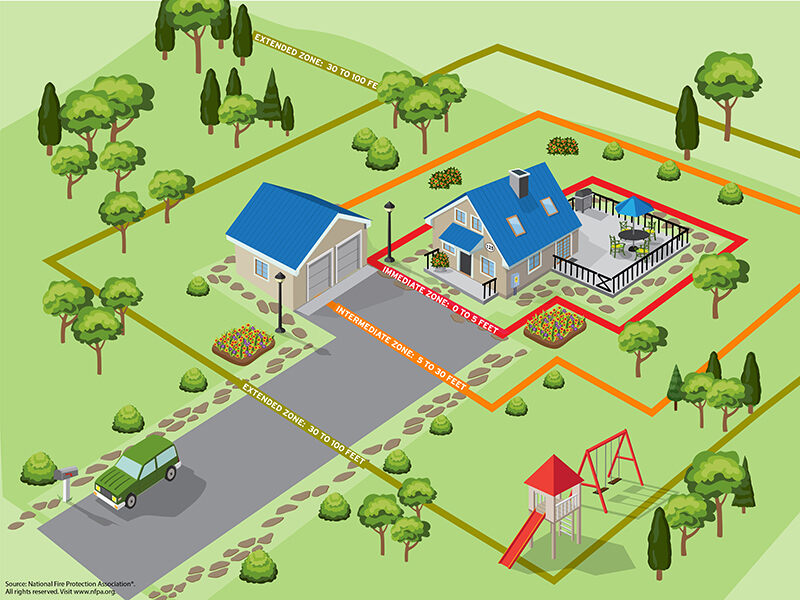
The difference between defensible space zone 1 vs zone 2 comes down to management intensity. Zone 1, covering five to thirty feet from the structure, should be irrigated, well-spaced, and free of ladder fuels. Trees pruned at least six feet from the ground. No dense shrubs underneath the tree canopy. Zone 2, from 30 to 100 feet, focuses on breaking fuel continuity by thinning trees, mowing grass, and removing dead material throughout the property.
A defensible space inspection, whether conducted by a contractor or a local fire agency, evaluates how well each zone meets these standards. The work to bring a property into compliance can range from a single day of clearing to several days of systematic tree thinning, ladder fuel removal, and full debris haul-off. See our full defensible space services for what that work involves on a typical Utah property.
How to Harden Your Home Against Wildfire
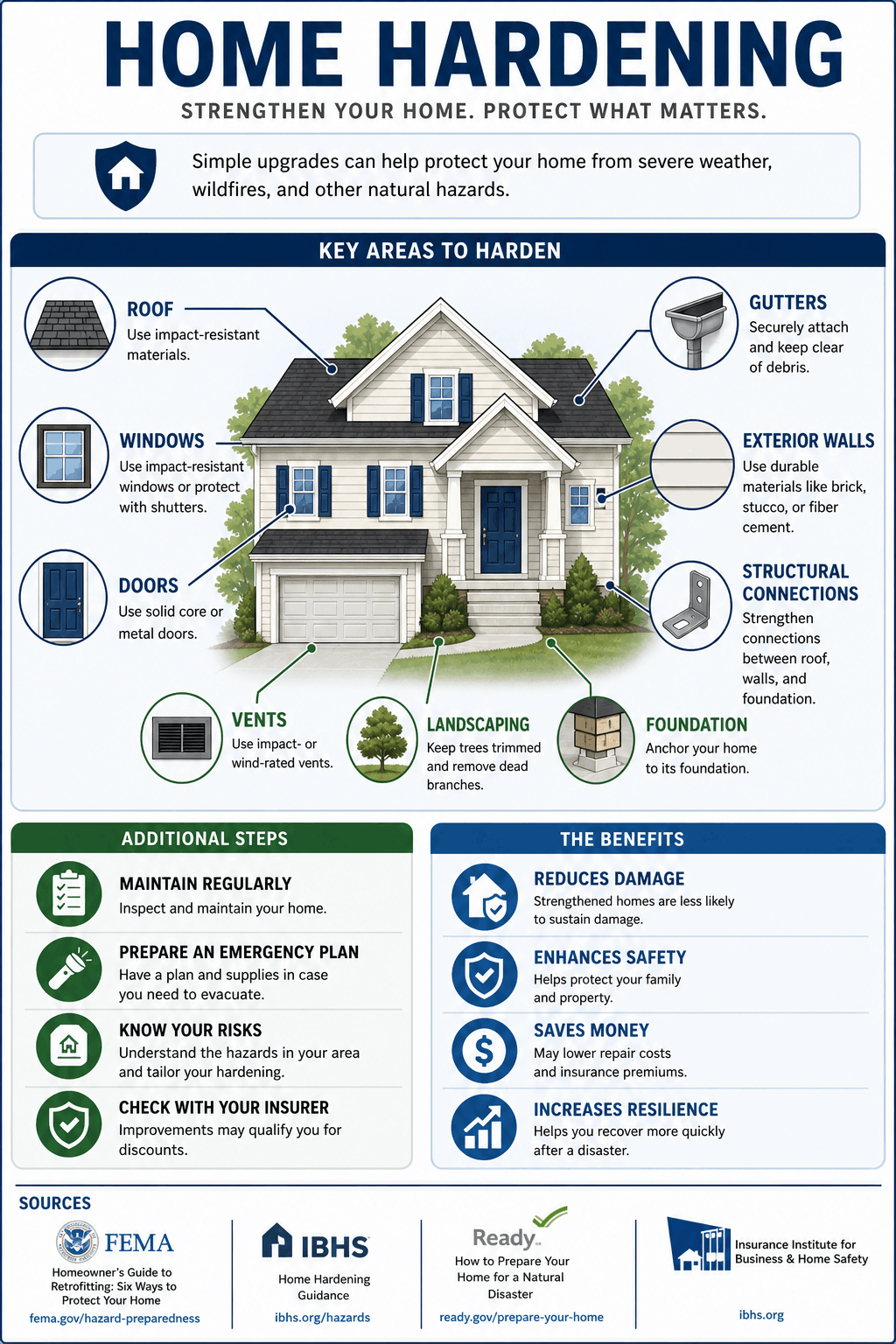
Once the land is addressed, a contractor turns to the structure itself. Hardening your home against wildfire means identifying and sealing the openings and vulnerabilities that let embers in.
Vents are the primary entry point. Unscreened soffit, foundation, and attic vents are direct pathways into a structure. Installing wildfire-proof vents for your home, specifically ember-resistant vents with fine mesh screening or an intumescent coating, dramatically reduces the risk of ignition inside the walls and attic. This is one of the highest-impact upgrades a homeowner can make before fire season.
How to protect your roof from wildfire embers involves two things: roofing material and debris management. Non-combustible or Class A roofing materials, combined with regular cleaning of leaves and organic debris from roof surfaces and gutters, remove the fuel source that embers need to ignite. A contractor will flag any roof conditions that increase vulnerability, including accumulated debris, damaged flashing, and gaps around roof penetrations.
Fire-resistant siding for homes matters most at the Zone 0 level. Gaps, cracks, and combustible siding near the foundation give embers a foothold. A qualified contractor will identify these vulnerabilities and document anything that requires a licensed general contractor to repair or replace.
How to Prepare Your Property for Wildfire: The Full Picture
When homeowners ask how to prepare my house for wildfires, the honest answer is that it's not a one-afternoon project. How to prepare property for wildfire properly means addressing the land, the structure, and the stored materials around it in a systematic way. Firewood stacked against the foundation, propane tanks in combustible locations, and wood mulch against siding are all straightforward to correct and genuinely dangerous to ignore.
When you're looking for home hardening contractors near you, the right ones build a scope of work specific to your property. Not a template. A plan built around your land, your structure, your risk exposure, and the current defensible space clearance requirements for your county. Read more about who we are and how we approach this work.
What to Expect from the Process
Start with the assessment. Get a free wildfire home assessment in Utah before fire season opens. Understand your zones, your structural vulnerabilities, and your compliance status. Then work with a contractor who can execute the full scope: vegetation management, defensible space creation, structural hardening, and complete debris removal from the property.
The homeowners who fare best in wildfire events are the ones who understood their risk and acted on it before the season started. Request a free consultation and we'll walk your property and give you an honest picture of where you stand.