
Wildfire Education

Understand your risk so you can act on it.

The homeowners who fare best in wildfire events are the ones who understood the threat before the season started. This is what we want every Utah homeowner to know.

Fundamentals

What Is Defensible Space and Why Does It Work?

Defensible space is a managed buffer of vegetation around your home, structured to slow the approach of a wildfire, reduce radiant heat, and prevent ember accumulation that causes structural ignition.

It is organized into three distinct zones, each with a specific role in protecting your home. The zones are based on fire behavior science and how fire intensity changes as it approaches a structure.

Zone 0 (0–5 feet): The non-combustible ember-resistant zone. Everything here should be non-combustible: gravel, rock, concrete. No dead plant material, no wood mulch, no combustible debris.

Zone 1 (5–30 feet): Lean, clean, and green. Well-irrigated, low-growing, well-spaced plants. No ladder fuels. Trees pruned six feet from the ground. This zone slows fire and reduces radiant heat reaching the structure.

Zone 2 (30–100 feet): Reduced fuel load. Trees and shrubs spaced to prevent fire from spreading crown to crown. Grass mowed short. Dead material removed. This zone disrupts the fuel continuity that allows a ground fire to escalate.

Defensible Space Zones

Zone 0: Ember Resistant
0 to 5 feet: non-combustible only
Zone 1: Lean, Clean & Green
5 to 30 feet: managed, irrigated, spaced
Zone 2: Reduced Fuel Load
30 to 100 feet: thinned, cleared, mowed

Each zone ensures every layer of your property plays a role in disrupting fire's path before it reaches your structure.
How Homes Actually Ignite

The Ember Threat: Why Fire Doesn't Need to Reach Your Home

The most widely misunderstood aspect of wildfire risk is how homes actually ignite. Most homeowners picture fire as a wave of flame that overtakes their house. In reality, that is rarely what happens.

The primary mechanism of home ignition in wildland-urban interface fires is ember cast: burning fragments of vegetation carried by the fire's wind ahead of the flame front. These embers can travel more than a mile. They land on roofs, in gutters, in vents, against wood siding, and in debris piles around the foundation.

When an ember lands in a vulnerable location and finds enough fuel to sustain ignition, the fire starts from the inside out. By the time the flame front arrives, the house may already be burning.

This is why the Zone 0 treatment (the 0-5 foot ember-resistant perimeter) is so critical. It eliminates the landing zones that embers need to ignite your structure, even if they travel from a fire a mile away.

Key Ember Facts

1+ mile
distance embers can travel ahead of a fire front
~90%
of homes lost in WUI fires ignite from ember cast, not direct flame
5 ft
the immediate perimeter where ember accumulation is most dangerous
Structural Resilience

Home Hardening: Making Your Structure More Resilient

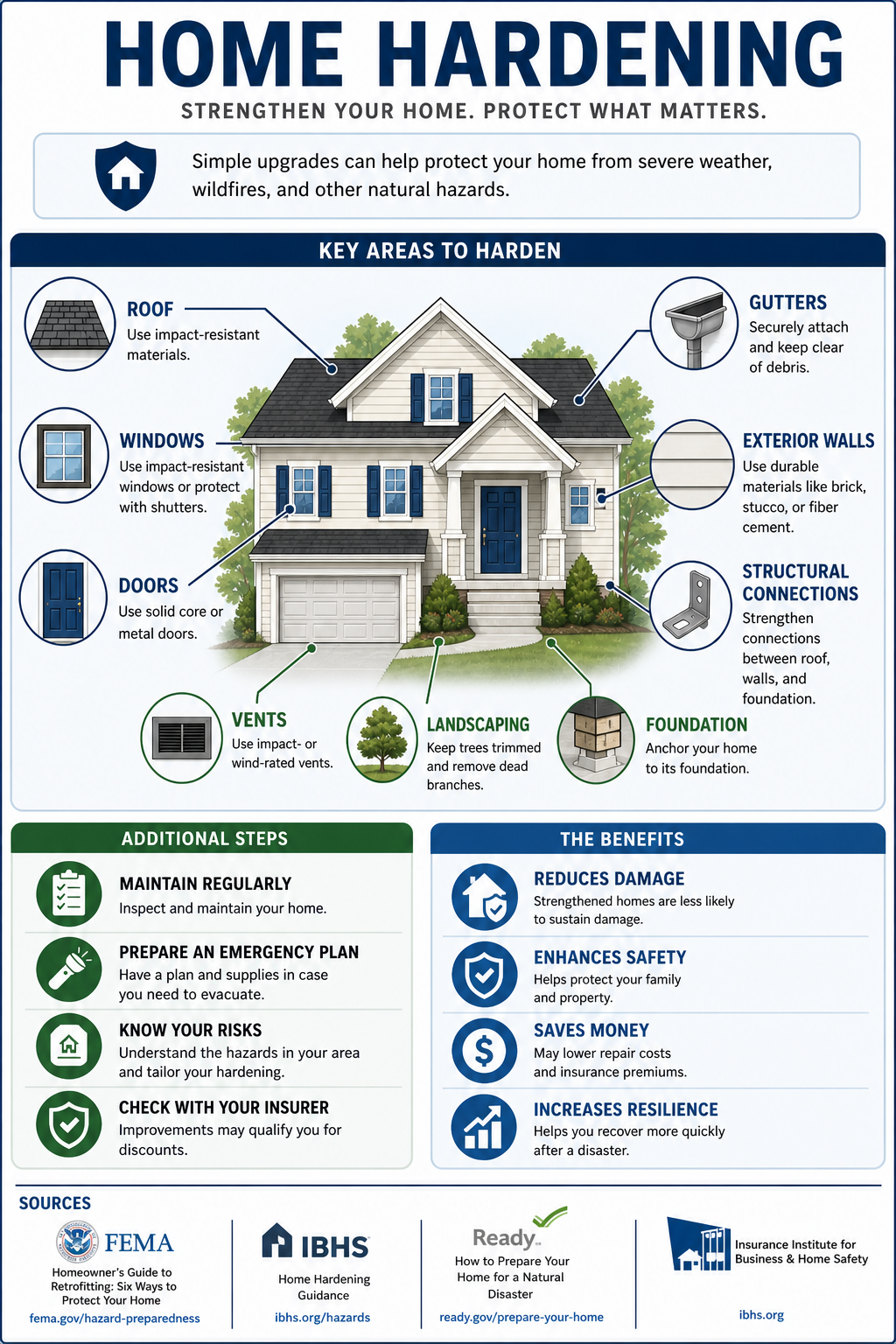
Defensible space manages the land. Home hardening addresses the structure itself. Together, they create layered protection, the same principle applied in every high-consequence operational environment.

Vents and openings: Unscreened vents under eaves and in foundations are primary ember entry points. Fine mesh screening dramatically reduces ignition risk.

Roof and gutters: Roofs accumulate dead leaves and organic debris, ideal ember fuel. Regular cleaning and non-combustible roofing materials matter significantly.

Decks and fences: Wood decks act as fuel pathways directly to the structure. Wood fences leading from vegetation to the home create a fire corridor. Non-combustible materials or zone breaks disrupt this pathway.

The immediate perimeter: Firewood stacked against the house, propane tanks in combustible locations, wood mulch against siding. All are ignition risks that are straightforward to eliminate.

Home hardening strategies
Annual Preparation

Your Annual Wildfire Prep Checklist

Wildfire mitigation requires ongoing maintenance. Vegetation grows back, debris accumulates, and conditions change season to season. Use this checklist each year before fire season.

This is not a substitute for a professional evaluation, but it gives you a working picture of where your property stands. If you want an expert assessment, request a free consultation.

  • Clear all dead leaves and debris from roof and gutters
  • Remove combustible materials within 5 feet of the structure
  • Relocate firewood piles at least 30 feet from the home
  • Check vents: screen with 1/8" wire mesh if unscreened
  • Prune trees to at least 6 feet off the ground (Zone 1)
  • Remove ladder fuels: low branches and dense shrubs under trees
  • Mow and maintain all grass within 100 feet of the structure
  • Thin trees and shrubs to reduce crown-to-crown contact
  • Clear dead plants and dry debris throughout the property
  • Assess deck and fence materials for combustibility
  • Schedule professional evaluation if uncertain about risk level
Take Action

Knowledge is only useful if it leads to action.

If reading this has you thinking about your property's risk, that's the right instinct. Let's walk your land and give you a professional picture of where you stand.